Loitering munitions: what they are and what buyers must verify
A loitering munition sits between a UAV and a guided munition. This explainer covers the category and the export-control and end-use checks that apply to buying one.
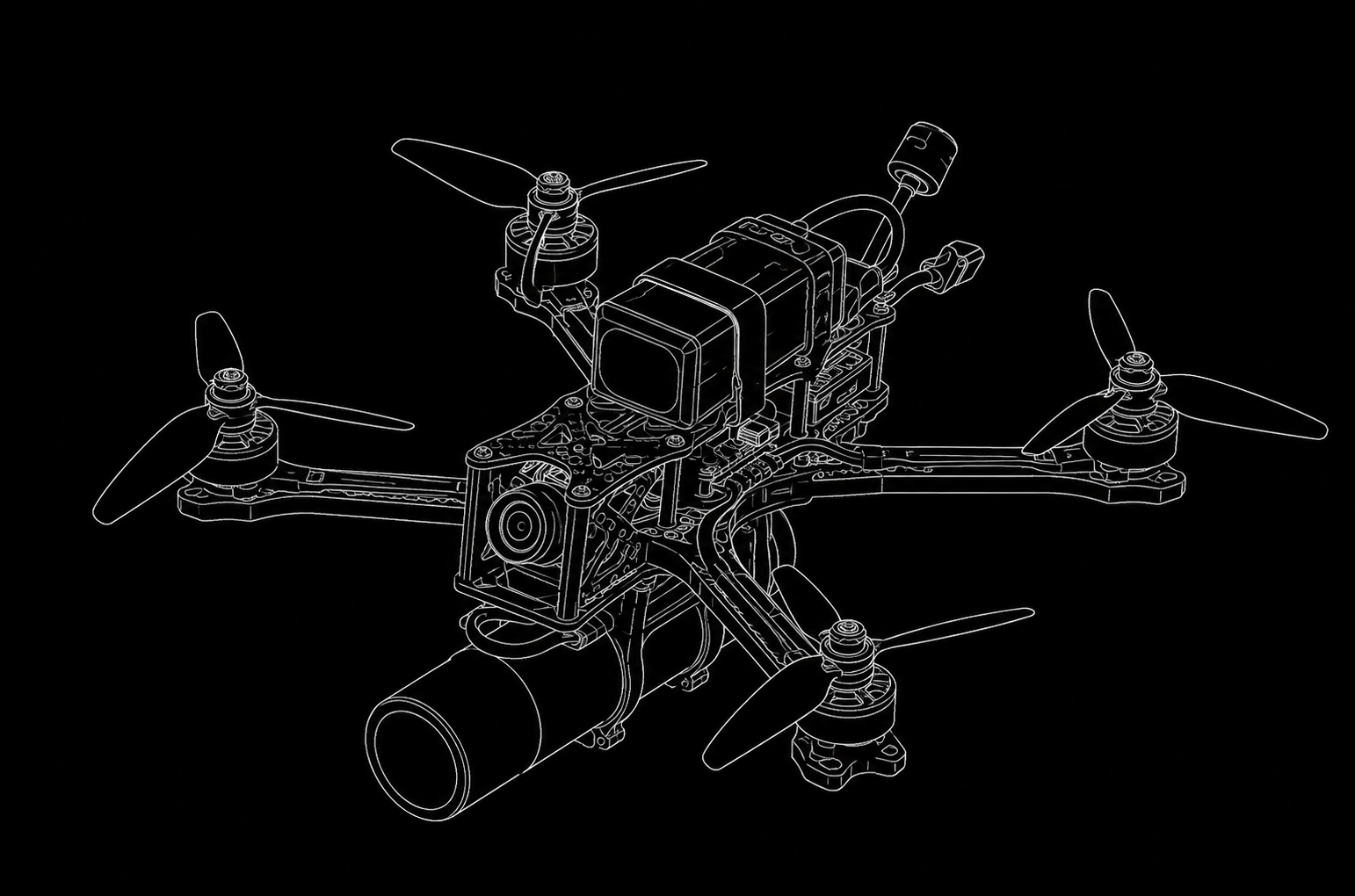
A loitering munition is an unmanned aircraft that can stay in the air over an area and is then directed to engage a target, which is why it is described as sitting between a UAV and a guided munition. Small FPV-class loitering munitions are now widely produced, and buying or selling one is a regulated act almost everywhere.
This article explains the category in general terms and, mainly, what a buyer or supplier has to verify before a transfer. It is not legal advice, and rules differ by country and by product.
What the term covers
The word is used for a range of aircraft. At the small end are FPV-class platforms, which are flown by an operator through a camera view. Larger fixed-wing types fly pre-planned routes. Goldie Arms offers FPV loitering munitions in standard, heavy-payload and fiber-optic configurations, described on the product pages.
What they have in common for regulatory purposes is that they combine an aircraft with a warhead or the means to carry one. That puts them in military-goods categories in most jurisdictions, and the aircraft, the payload, the control equipment and sometimes individual components can each be controlled separately.
Why transfers are controlled
Most countries license the export, import and transit of military equipment. The rules vary, but the same few frameworks come up repeatedly:
- EU member states license arms exports nationally, against the criteria of the EU Common Position 2008/944/CFSP. Dual-use goods, which include many sensors, radios, navigation modules and electronic components, fall under Regulation (EU) 2021/821.
- The United States controls defence articles under the International Traffic in Arms Regulations (ITAR) and other items under the Export Administration Regulations (EAR).
- National authorities issue the licences. In the Czech Republic that is the Ministry of Industry and Trade.
Components can be controlled even when the finished system is licensed elsewhere, so a supplier with US-origin parts may need US approval for a re-export. Classification of the specific product is the first step, and it is done by the licensing authority or by a specialist, not by the seller’s marketing description.
What a buyer has to verify
A compliant transfer rests on documents, and each one answers a specific question.
- Who the end user is. An end-user certificate, issued by the government or organisation that will actually use the equipment, names the final recipient.
- What it will be used for. An end-use statement describes the purpose, and a no-re-export clause binds the buyer not to pass the goods on without the exporter’s consent.
- That the destination is eligible. The licensing authority checks the destination against embargoes, sanctions and its own export-policy criteria.
- That the licence matches the shipment. The licence covers a defined item, quantity, recipient and route. A change in any of them can need a new or amended licence.
- That the chain of custody is recorded. Records of each handover, kept for the period the law requires, let regulators trace equipment back to the licensed transfer.
Red flags are usually in the paperwork: an intermediary who cannot name the end user, a destination that does not match the stated use, pressure to skip a step, or a request to ship to a different country than the licence names.
How Goldie Arms handles it
Goldie Arms trades in military and dual-use equipment through licensed channels. Access to the marketplace is by request, and every organisation goes through three steps: disclosure of the organisation and its use case, compliance review of end-use and jurisdiction eligibility, and credentialed onboarding. Chain of custody starts at onboarding, not at the point of sale. The process is described in what end-use verification looks like, and the licensing footprint in import/export licensing across the EU.
FAQ
What is a loitering munition?
An unmanned aircraft that can remain airborne over an area and is then directed to engage a target. It occupies the space between a UAV and a guided munition.
Do I need a licence to buy a loitering munition?
In most jurisdictions, yes. Export from the seller’s country and import into the buyer’s country are normally both licensed, and the exact requirements depend on the country and the product classification.
What is an end-user certificate?
A document issued by the government or organisation that will use the equipment. It names the final recipient and usually contains a promise not to re-export the goods without the exporter’s consent.
Are drone components controlled too?
Some are. Sensors, radios, navigation and electronic modules can be dual-use and need their own licence, even when they are shipped separately from the aircraft.