Fiber-optic FPV: how a physical link works and what it changes
A fiber-optic FPV drone replaces the radio link with a thin cable. What that buys, what it costs, and what it means for anyone defending against it.
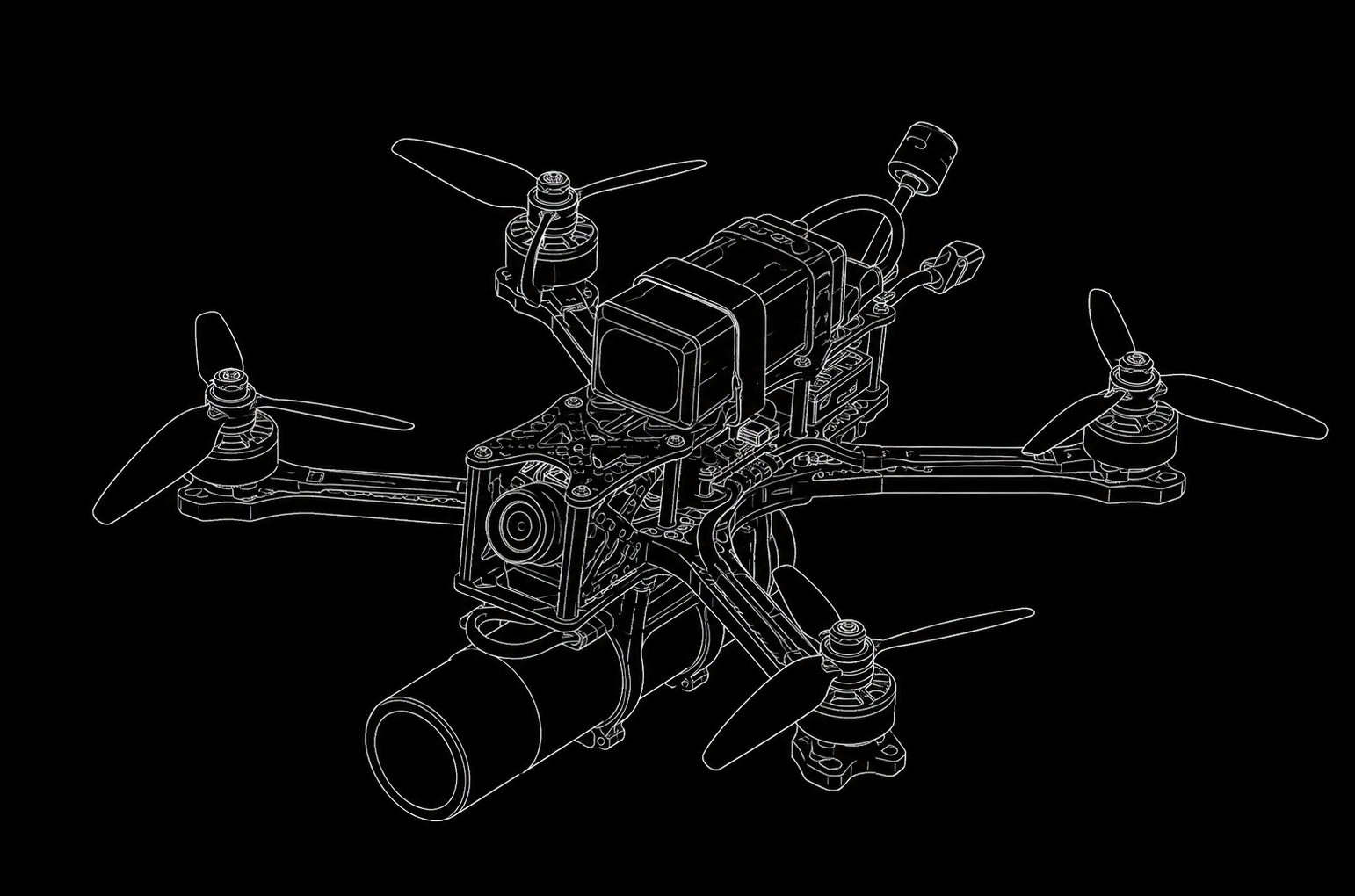
A fiber-optic FPV drone is flown over a thin optical fiber that unspools behind it, instead of over a radio link. The fiber carries the pilot’s commands up and the camera video down. Because nothing is transmitted through the air, there is no radio signal to jam and none to intercept.
Radio-frequency jamming is now standard on contested battlefields, which is why the approach has spread. This article explains how it works, what the trade-offs are, and what it changes for detection and defence.
How a fiber-optic link works
The aircraft carries a spool of fiber and pays it out as it flies. At the ground end, the fiber connects the pilot’s controller and goggles through a transceiver. Light pulses over glass replace the control and video radio links, so the pilot sees the camera image the way it would appear on a normal FPV drone, without the dropouts, interference or noise that radio links suffer from.
A standard FPV drone is the starting point, and the fiber system changes only the data link. On the Goldie Arms FPV platforms the fiber-optic variant sits alongside the standard and heavy configurations rather than replacing them.
What the physical link gives you
- Immunity to jamming. An RF jammer attacks the radio link. With no radio link, there is nothing to attack.
- No emissions. The drone does not transmit, so it does not reveal the pilot’s position through a radio signature.
- A clean video feed. Glass does not suffer from the multipath and interference that degrade a radio picture, so the pilot can keep control in places where radio would fail, such as inside buildings or tunnels.
What it costs
The same cable that removes the radio link also limits the aircraft.
- Range is set by the spool. The fiber on board is the distance the drone can fly out. This is why fiber-optic sits alongside standard and heavy configurations and is best suited to shorter-range work in the most electronically contested environments.
- Weight. The spool and fiber add mass, which reduces what the airframe can carry and how long it can fly.
- A trailing line. The fiber can snag on obstacles or break, and it limits how the aircraft can manoeuvre.
- One-way logistics. The fiber is a consumable and is not recovered after the flight.
What it means for defenders
A fiber-optic drone defeats the two most common cheap counter-drone measures. Jamming cannot reach it, and a passive radio-frequency detector has nothing to hear, because the aircraft is not transmitting.
That moves the weight of detection onto sensors that do not depend on the drone’s radio. A radar sees the airframe whether or not it emits. A camera sees the aircraft itself. The Goldie Arms GA-R5000 radar is an X-band radar built to detect and track low-altitude micro-UAVs, and its published specification is detection of a 0.01 m² target at 5 km or more.
For the same reason, a site that only runs RF detection has a blind spot against this class of drone. Radar, optical sensors and RF detection each cover a different part of the picture, and layering them is how a defender closes the gaps. For how Goldie Arms approaches the counter-UAV side, see Inside the GA-RX1.
Compliance and supply
Fiber-optic FPV platforms are military or dual-use equipment in most jurisdictions. Export, transfer and end-use are controlled, and licences are required. Goldie Arms handles import and export through licensed channels and screens every buyer on its marketplace. See what end-use verification looks like and the notes on EU import/export licensing.
FAQ
What is a fiber-optic FPV drone?
An FPV drone that is controlled and sends video through a thin optical fiber that unspools from the aircraft, instead of through a radio link. The fiber replaces the radio signal in both directions.
Can a fiber-optic drone be jammed?
Not through the data link, because there is no radio signal to jam. Other measures, such as detection and physical interception, still apply.
What is the main limit of a fiber-optic FPV drone?
Range and payload. The length of the fiber on the spool sets how far the aircraft can go, and the spool adds weight.
How do you detect a drone that does not transmit?
With sensors that do not rely on the drone’s own radio: radar and electro-optical or infrared cameras. Passive RF detection will not hear it.